Let’s be completely honest with each other. I know exactly how your trading session went today because I have lived that exact same day more times than I care to admit. If you are reading this, chances are you are completely stuck, want to know how to stop overtrading, but you aren’t just stuck with your trading/funded account; you are in a loop. How?
Well, you woke up, looked at the charts, and promised yourself you would follow your plan. Maybe you even get a good setup early on. Your Funded Account was sitting in the green. You felt like a professional. You should have closed your laptop right then and enjoyed the rest of your day.
But you didn’t.
You stayed at the desk. You started staring at the screen, watching the candles paint, looking for just one more setup to make the day a little bit better. And that is exactly when everything fell apart. What followed was a blur of forced entries, widened stop-losses, and absolute frustration.
Let me tell you the reality, learning how to stop overtrading is not about finding a better moving average or drawing better trendlines or watching a YouTube video of how to be a disciplined trader, that’s not the solution. You are stuck in your own head, and your mindset is absolutely fried. Until you manage to fix that headspace, trading will feel pretty much impossible.
Here is the raw reality of why we overtrade, why relying on discipline or any other indicator is a massive trap, and exactly how to reprogram your mind to protect your capital. And the solution may sound simple, but trust me, they are highly effective.
The Beethoven Illusion: Detaching from Losses
To stop the cycle of overtrading, you have to understand why you are clicking the button so many times in the first place. It almost always comes down to your inability to accept a loss. We take one normal hit, our ego gets bruised, and we immediately fire off three more forced trades just to “fix” it and prove we were right.

Learning to detach from the losses you have made is important to being able to REMAIN in this GAME and to continue developing your Long-Term survival strategy. For example, imagine you are taking piano lessons. You get a one-hour lesson, on a Beethoven song. The instructor expects you to play it perfectly the time you try. That would be tough, especially if you did not practice afterwards before trying to play it. Trading is the way. You need to practice trading to get better.
We step into the live markets expecting instant perfection, and when we make a mistake, we just throw our hands in the air, get mad at ourselves, and start revenge trading. Knocking yourself down over a normal loss lowers your mental state and kills your energy. Instead of seeing these moments as failures, you need to view every mistake and every loss as a massive room for growth. As long as you learn from that mistake and never make it again, you are becoming more efficient. You have to give those losses to the market just to have the opportunity to capitalise when the real setups finally arrive.
Stop Blaming the Market (Taking Absolute Responsibility)
Overtrading is very often a symptom of playing the victim. You take a loss, and suddenly you feel like the market stole from you. You blame the broker, you blame the news, or you blame your noisy environment.
And the harsh truth is this: If you are sitting there whining about what happened, nothing that happens will get better. You are exactly where you are because of everything you’ve done since the day you were born, not because of any external conditions (the environment, the people in your life, or the economy).
It is not your environment’s fault, it is not your friends’ fault, and it is not the market’s fault. It is yours. The second you stop pointing fingers and take full responsibility for everything that happens to you is the exact second you take control of your future. If you keep blaming outside forces for your blown accounts, your future will look just as bad because you have given away all control over your own life.

When you own your actions, you stop revenge trading. You stop trying to “get back” at a market that doesn’t even know you exist. If you lose, you are responsible for loss if they do not meet their expectations. To be successful, you need to accept your losses and continue moving ahead.
Why Perfectionism = Procrastination
Another huge trap that causes excessive trading is perfectionism. I’ve been there before, wanting every trade to be executed without mistakes, but it is erroneous to decide to make everything perfect for every single transaction.
Perfectionism is usually a form of procrastination.
Countless amounts of people sit around wishing to find the perfect time/condition before they will take necessary steps toward their objectives.

People constantly wait for the “perfect” moment or the “perfect” setup to take action on their goals. For example, I delayed starting my YouTube channel for two whole years because I had placed a down payment on a Tesla Roadster and wanted my very first video to be a highly cinematic masterpiece featuring that car. That car never arrived, and when I finally decided to just start, my first video wasn’t cinematic at all—it was just a simple trade recap. If I hadn’t waited for that perfect moment, I could have touched the lives of so many more people much sooner.
In trading, this perfectionism manifests as trying to execute the “perfect” recovery. You lose a trade, and instead of walking away, you sit there waiting for a miraculous setup to perfectly erase your drawdown. When it doesn’t appear, you start seeing setups in random market noise, forcing trades out of pure desperation. You have to stop waiting for perfection and start executing with mechanical consistency.
The Mechanical Solution for How to Stop Overtrading: The Reset
If you want to actually fix this, you have to realise that relying on willpower and discipline does not work. When you are staring at a bleeding account, your logical brain shuts down, and the gambler takes over. You cannot out-think an emotional meltdown.
You need a mechanical tourniquet. You need the One-Trade-A-Day rule.
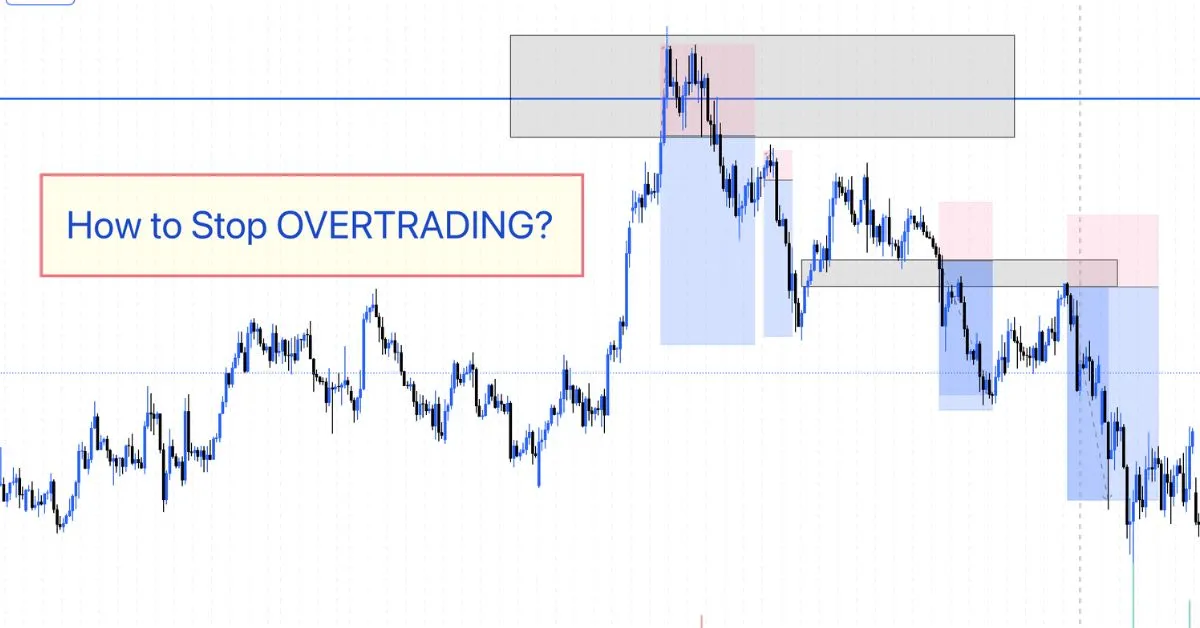
When you sit at your desk with unlimited permission to click the buy button, you will inevitably fire at choppy market noise. But when you create a strict, unbreakable rule that you only get one single bullet for the entire day, everything shifts. You stop wasting your capital on mediocre setups. You sit on your hands and wait.

If you take your one trade and it hits your 1R stop-loss, you take the hit without flinching. You mentally accept that small loss as the cost of doing business. And then, you use the ultimate circuit breaker: physical separation. You physically walk away from the desk. You shut the laptop. If you have to, you temporarily delete the trading app from your phone so you cannot sneak a look at the charts. You put an undeniable, physical barrier between your emotions and your account balance.
Fix Your Life, Not Just Your Charts
Learning how to stop overtrading isn’t just about protecting your funded account. It is about taking back control of your own mind.
Fixing your psychology within trading will directly change the way you do things in real life. It helps you build success outside of the charts and simply makes you a happier person in general. Stop relying on the illusion of discipline. Drop your ego, take absolute responsibility for your clicks, and implement the mechanical rules that actually protect you from yourself.
You have the power to stop the cycle today. Walk away from the screen, accept the math, and I will see you at the payout screen.